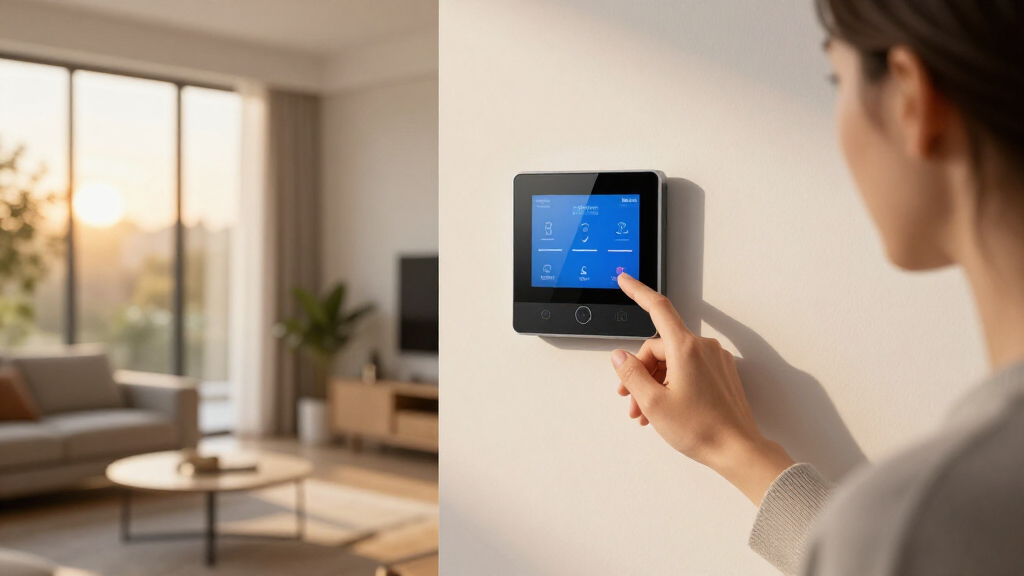
Home Assistant Green is my best overall pick among these smart home automation devices because it offers room to build connected routines across a home, while the Echo Hub adds a dedicated control screen and Tapo Matter Smart Plug Mini is a straightforward way to automate outlets. The right choice depends on whether you want to coordinate many devices, control them from a central panel, or start with one simple task. Matter support can widen compatibility, but it does not remove the need to check each device’s ecosystem and network requirements. Switches also bring wiring questions that plugs avoid. Read on for the full comparison and a guide to matching a device to your setup.
Key Takeaways
- Home Assistant Green earns the overall lead for buyers who want a hub with advanced automation; simple plugs are easier to start with but cannot coordinate a whole-amazon.com/dp/B0CXVKSG19?tag=bauleiterbrief-20&ascsubtag=dc-1007078″ target=”_blank” rel=”nofollow sponsored noopener”>home setup on their own.
- Tapo Matter Smart Plug Mini is the most flexible plug pick in this lineup for households balancing Apple Home, Alexa, and Google Home, while the Kasa and GHome plugs suit more familiar Wi-Fi routines.
- Echo Hub stands apart by putting smart home controls on a dedicated screen; it makes more sense for a shared control point than for someone who only needs remote app access.
- Sonoff MiniR4, HS200, and HS210 bring automation to existing lighting circuits, but they require attention to wiring, pole configuration, and installation comfort that plug-in devices do not.
- SwitchBot Curtain Opener 3 automates a physical task rather than an outlet or light, while Amazon Smart Thermostat targets climate schedules; these focused devices are useful when their specific job matches the household.
| GHome WiFi Smart Plug, Compatible with Alexa and Google Assistant | 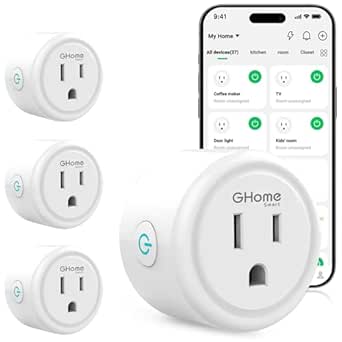 | Best for Simple Plug-In Automation | Connectivity: 2.4 GHz Wi-Fi, Bluetooth | Voice assistants: Alexa, Google Assistant | Apps: GHome, Smart Life, Tuya | VIEW LATEST PRICE | See Our Full Breakdown |
| Sonoff MiniR4 10A Smart WiFi Light Switch – Universal DIY Module, Alexa & Google Home Compatible, No Hub Required (4-Pack) |  | Best for Compact In-Wall Retrofits | Connectivity: Wi-Fi | Voice control: Alexa, Google Home | Hub requirement: No additional hub | VIEW LATEST PRICE | See Our Full Breakdown |
| Home Assistant Green Smart Home Hub with Advanced Automation |  | Best for Advanced Cross-Device Automation | Operating system: Home Assistant OS | Memory: 4 GB RAM | Storage: 32 GB | VIEW LATEST PRICE | See Our Full Breakdown |
| Tapo Smart Hub with Built-in Chime H100, 2.4GHz Wi-Fi Required |  | Best for Tapo Sensor and Chime Routines | Connectivity: 2.4 GHz Wi-Fi | Wireless range: Up to 30 meters | Device capacity: Up to 64 devices | VIEW LATEST PRICE | See Our Full Breakdown |
| TP-Link Tapo Matter Smart Light Switch 2-Pack | 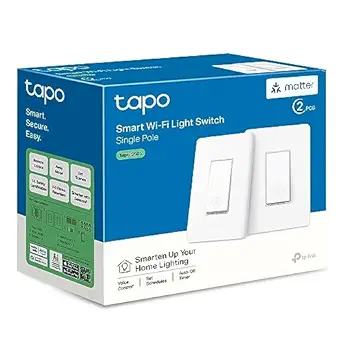 | Best for Multi-Platform Wall Lighting | Compatibility: Apple Home, Amazon Alexa, Google Home, Samsung SmartThings | Protocol: Matter | Wiring: Neutral wire required | VIEW LATEST PRICE | See Our Full Breakdown |
| Echo Hub 8″ Smart Home Control Panel |  | Best Dedicated Control Panel | Display: 8-inch touchscreen, 1280 × 800 | Smart home compatibility: Wi-Fi, BLE Mesh, Zigbee, Thread, Matter, Amazon Sidewalk | Wi-Fi: Dual-band 802.11a/b/g/n/ac | VIEW LATEST PRICE | See Our Full Breakdown |
| TP-Link Tapo Matter Supported Smart Plug Mini, 15A/1800W, 3-Pack |  | Best Cross-Platform Plug | Maximum power: 15 A / 1800 W | Connectivity: 2.4 GHz Wi-Fi | Protocol: Matter | VIEW LATEST PRICE | See Our Full Breakdown |
| SwitchBot Automatic Curtain Opener 3 (2025 Model) |  | Best for Automated Curtains | Model: W2400000 | Connectivity: Bluetooth; Wi-Fi via Hub; Matter | Maximum curtain weight: 16 kg / 33 lb | VIEW LATEST PRICE | See Our Full Breakdown |
| Amazon Smart Thermostat |  | Best for Alexa-Based Climate Routines | Dimensions: 3.56 × 3.56 × 0.84 inches | Weight: 3.86 oz | Model: S6ED3R | VIEW LATEST PRICE | See Our Full Breakdown |
| Kasa Smart Plug HS103P4, 4-Pack |  | Best Multi-Room Plug Pack | Pack size: 4 plugs | Voltage: 120 V AC | Maximum power: 15 A / 1800 W | VIEW LATEST PRICE | See Our Full Breakdown |
| Kasa Smart Light Switch (HS200) – Single Pole, Requires Neutral Wire | 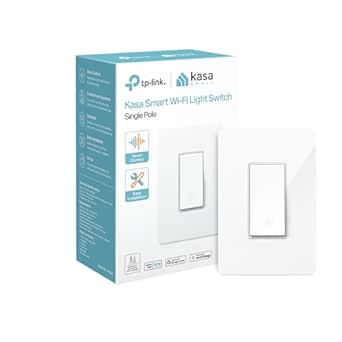 | Best Overall Single-Pole Switch | Model: HS200 | Mount type: Single-pole wall switch | Input voltage: 100–120 VAC, 50/60 Hz, 15 A | VIEW LATEST PRICE | See Our Full Breakdown |
| Kasa Smart 3-Way Switch Kit, HS210, Requires Neutral Wire |  | Best for 3-Way Circuits | Model: HS210 | Circuit type: 3-way | Wiring requirement: Neutral wire required | VIEW LATEST PRICE | See Our Full Breakdown |
| Tapo Smart Plug Wi-Fi, Energy Monitoring, P115 (4-Pack), 15A | 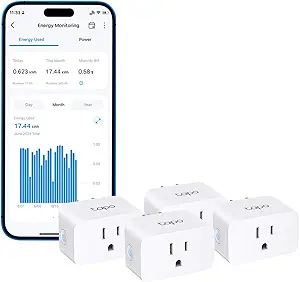 | Best for Energy Monitoring | Model: P115 | Pack size: 4 plugs | Maximum current: 15 A | VIEW LATEST PRICE | See Our Full Breakdown |
| Kasa Smart Light Switch, Single Pole, Requires Neutral Wire | 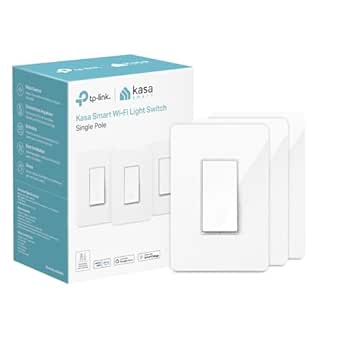 | Best for Simple Scheduled Lighting | Circuit type: 1-way | Operating voltage: 120 V | Wattage: 600 W | VIEW LATEST PRICE | See Our Full Breakdown |
| Linkind Matter Smart Plug (4-Pack) | 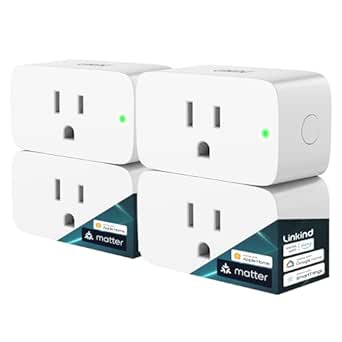 | Best for Cross-Platform Automation | Model: LC09003256 | Pack size: 4 plugs | Power capacity: 1800 W / 15 A | VIEW LATEST PRICE | See Our Full Breakdown |
| smart home automation device | Connectivity |
|---|---|
| GHome WiFi Smart Plug | 2.4 GHz Wi-Fi, Bluetooth |
| Sonoff MiniR4 10A Smart WiFi L | Wi-Fi |
| Home Assistant Green Smart Hom | Ethernet, USB, Bluetooth |
| Tapo Smart Hub with Built-in C | 2.4 GHz Wi-Fi |
| TP-Link Tapo Matter Smart Ligh | 2.4 GHz Wi-Fi |
| Echo Hub 8" Smart Home Control | — |
| TP-Link Tapo Matter Supported | 2.4 GHz Wi-Fi |
| SwitchBot Automatic Curtain Op | Bluetooth; Wi-Fi via Hub; Matter |
| Amazon Smart Thermostat | — |
| Kasa Smart Plug HS103P4 | 2.4 GHz Wi-Fi |
| Kasa Smart Light Switch | 2.4 GHz Wi-Fi |
| Kasa Smart 3-Way Switch Kit | — |
| Tapo Smart Plug Wi-Fi | — |
| Kasa Smart Light Switch | — |
| Linkind Matter Smart Plug | 2.4 GHz Wi-Fi and Matter |
More Details on Our Top Picks
GHome WiFi Smart Plug, Compatible with Alexa and Google Assistant
GHome’s plug is a straightforward way to automate lamps and other plug-in devices if you already use Alexa or Google Assistant. App-based remote control, schedules, timers, and group control let you set routines without replacing a wall switch. Compared with the Home Assistant Green, it takes less setup and asks for less commitment, but it offers a narrower path to combining devices from different systems. It also needs a stable 2.4 GHz Wi-Fi connection, and voice control depends on completing app setup first. Choose it for a few simple routines and shared household control; skip it if you want a hub-led system with broader automation options or need to avoid another app.
Pros:- Remote app control supports routines when nobody is home
- Scheduling and timers automate repeated on-off tasks
- Group control and sharing suit households with multiple plugs
- Works with Alexa and Google Assistant after app setup
Cons:- Requires a stable 2.4 GHz Wi-Fi network
- Voice control requires setup through a compatible app
- Offers a narrower automation scope than a dedicated hub such as Home Assistant Green
Best for: Alexa or Google Assistant households automating lamps and other plug-in devices with schedules and app control
Not ideal for: Buyers building a hub-based system across multiple device protocols or households without stable 2.4 GHz Wi-Fi
- Connectivity:2.4 GHz Wi-Fi, Bluetooth
- Voice assistants:Alexa, Google Assistant
- Apps:GHome, Smart Life, Tuya
- Remote control:App control
- Automation:Scheduling and timers
- Multi-device features:Group control and sharing
Our verdict“Choose the GHome plug for uncomplicated app and voice routines on plug-in devices, provided 2.4 GHz Wi-Fi and app setup fit your home.”
Sonoff MiniR4 10A Smart WiFi Light Switch – Universal DIY Module, Alexa & Google Home Compatible, No Hub Required (4-Pack)
The Sonoff MiniR4 automates an existing wall switch while keeping physical control in the room, making it a better fit for built-in lighting than the plug-in GHome WiFi Smart Plug. Its small stated dimensions suit tight mounting boxes, and detachable relay mode supports independent external switch operation. Alexa and Google Home control work without a separate hub, though setup still runs through the eWeLink app. The four-module pack suits a multi-switch project, but its 10 A limit rules out some higher-power loads, and Wi-Fi-only connectivity does not join Zigbee systems. Check the listed electrical ratings and local wiring requirements before installation; this is a DIY module, not a plug-in shortcut.
Pros:- Compact dimensions suit small mounting boxes
- Retains remote, voice, and physical switch control
- Works with Alexa and Google Home without an additional hub
- Detachable relay mode supports independent external switch operation
Cons:- Wi-Fi only, with no Zigbee compatibility
- 10 A limit may not suit higher-power loads
- Requires eWeLink app setup and appropriate in-wall installation
Best for: Homeowners automating several existing light circuits who have compatible wiring and want to retain physical switch control
Not ideal for: Renters, buyers who need Zigbee integration, or anyone whose lighting load exceeds the stated 10 A limit
- Connectivity:Wi-Fi
- Voice control:Alexa, Google Home
- Hub requirement:No additional hub
- Operating voltage:120 V
- Dimensions:1.56 × 1.3 × 0.66 inches
- Pack size:4 modules
- Certifications:TÜV, CE, FCC
Our verdict“Pick the MiniR4 for compact, app-connected control of existing light circuits if its electrical rating and your wiring are a match.”
Home Assistant Green Smart Home Hub with Advanced Automation
Home Assistant Green is the most flexible automation foundation in this group for buyers who want routines spanning different devices and protocols. It arrives with Home Assistant OS installed, and its 4 GB RAM and 32 GB storage provide a dedicated base for that system. Unlike the Tapo H100, Green is not limited to one device ecosystem; adding Z-Wave, Zigbee, or Thread support requires compatible USB devices, though, so those capabilities are not built in. It also relies on Ethernet rather than Wi-Fi and is meant for home automation, not general computing. Compared with the plug-in GHome, it takes more planning but can serve as the central controller for a much broader setup.
Pros:- Pre-installed Home Assistant OS simplifies initial setup
- Fanless design runs silently
- USB expansion can add Z-Wave, Zigbee, and Thread devices
- 4 GB RAM and 32 GB storage support a dedicated automation hub
Cons:- Requires Ethernet and has no Wi-Fi
- Z-Wave, Zigbee, and Thread require compatible USB devices
- Focused on home automation rather than general-purpose computing
Best for: Hands-on smart home builders who want to connect and automate devices across ecosystems using Home Assistant
Not ideal for: Buyers seeking a wireless, ready-to-use hub for a single brand or a general-purpose mini computer
- Operating system:Home Assistant OS
- Memory:4 GB RAM
- Storage:32 GB
- Connectivity:Ethernet, USB, Bluetooth
- USB ports:2
- Radio expansion:Z-Wave, Zigbee, and Thread via USB devices
- Dimensions:4.41 × 4.41 × 1.26 inches
Our verdict“Choose Home Assistant Green if you want a dedicated, expandable hub for cross-device automation and are comfortable with Ethernet and add-on radios.”
Tapo Smart Hub with Built-in Chime H100, 2.4GHz Wi-Fi Required
The Tapo H100 is a focused hub for sensor-led routines within the Tapo ecosystem. It links supported sensors, switches, and buttons, with a stated range up to 30 meters and capacity for up to 64 devices. The built-in chime and siren, rated up to 90 dB, give it a practical alert role alongside automation. That makes it more tailored to door and motion alerts than the Home Assistant Green, which is better suited to broad, cross-ecosystem control but asks buyers to configure more. The tradeoff is that H100 is limited to Tapo devices and needs 2.4 GHz Wi-Fi; it does not directly connect to smart plugs or lighting. Choose it when Tapo sensors and audible alerts are the center of the plan.
Pros:- Connects up to 64 supported devices
- Stated wireless range reaches up to 30 meters
- Built-in chime supports customizable doorbell tones
- Siren output is rated up to 90 dB
Cons:- Limited to Tapo ecosystem devices
- Requires 2.4 GHz Wi-Fi and does not support 5 GHz
- Does not directly connect to smart plugs or lighting
Best for: Tapo households automating compatible sensors and buttons with audible chime or siren alerts
Not ideal for: Buyers seeking a cross-brand hub or direct hub control of smart plugs and lights
- Connectivity:2.4 GHz Wi-Fi
- Wireless range:Up to 30 meters
- Device capacity:Up to 64 devices
- Siren volume:Up to 90 dB
- Supported devices:Tapo sensors, switches, and buttons
- Mobile OS compatibility:Android 5.0+ or iOS 10.0+
- Certifications:FCC, RoHS
Our verdict“Pick the H100 if your Tapo automation centers on sensors and you want an integrated chime and siren.”
TP-Link Tapo Matter Smart Light Switch 2-Pack
The Tapo S505 is the strongest fit here for buyers who want wall lighting available across major smart home platforms. Matter support covers Apple Home, Alexa, Google Home, and SmartThings, while LAN control can keep local control available within the home network. Compared with the Sonoff MiniR4, the S505 is explicitly built around Matter and broad platform access, but it requires a neutral wire and supports single-pole installation only. Its two-switch pack suits buyers updating more than one circuit, though it needs 2.4 GHz Wi-Fi and may call for an electrician if you are unfamiliar with switch wiring. Choose it for platform flexibility at the wall; skip it if your wiring or multi-way switch setup does not match.
Pros:- Matter support spans Apple Home, Alexa, Google Home, and SmartThings
- LAN control and multi-admin access support shared platform use
- Scheduling and voice control add routine options
- Two-switch pack suits multi-room lighting updates
Cons:- Requires a neutral wire
- Single-pole installation only
- Uses 2.4 GHz Wi-Fi and may require an electrician for installation
Best for: Households with neutral wiring that want smart wall switches shared across Apple Home, Alexa, Google Home, or SmartThings
Not ideal for: Buyers without a neutral wire or those replacing multi-way circuits that need more than single-pole support
- Compatibility:Apple Home, Amazon Alexa, Google Home, Samsung SmartThings
- Protocol:Matter
- Wiring:Neutral wire required
- Input voltage:100–120 VAC, 50/60 Hz
- Maximum current:15 A
- Connectivity:2.4 GHz Wi-Fi
- Installation type:Single-pole
- Pack size and certification:2 switches; UL certified
Our verdict“Choose the Tapo S505 two-pack for Matter-connected wall lighting if your circuits are single-pole and include neutral wiring.”
Echo Hub 8″ Smart Home Control Panel
The Echo Hub gives an Alexa-centered home a dedicated place to control devices, check cameras, and start routines. Its customizable 8-inch dashboard makes frequently used controls easier to reach than voice commands alone, while support for Zigbee, Thread, and Matter lets it connect with a broad mix of devices. Compared with the Home Assistant Green, this is a more visual, ready-to-use control point; it offers less appeal to people who want to build and manage advanced automations around a hub. The tradeoff is a fixed, wall-oriented screen: it needs power, and PoE or cable management may require separate accessories. I’d choose it for a household that wants automation controls visible and accessible in a central spot, not for portable control around the home.
Pros:- Dashboard controls can be arranged and resized around household routines
- Supports Zigbee, Thread, Matter, Wi-Fi, and Bluetooth devices
- Can be wall-mounted or used on a tabletop with suitable accessories
- Includes a microphone-off button and other privacy controls
Cons:- PoE and cable-management options may require separate accessories
- Needs a power connection and is not designed for handheld use
- Bluetooth support is limited to A2DP and AVRCP, without HFP or PIN-code device support
Best for: Alexa households that want a shared wall-mounted dashboard for routines, cameras, and compatible devices
Not ideal for: People who want a portable controller or a highly configurable automation hub rather than a fixed Alexa-focused screen
- Display:8-inch touchscreen, 1280 × 800
- Smart home compatibility:Wi-Fi, BLE Mesh, Zigbee, Thread, Matter, Amazon Sidewalk
- Wi-Fi:Dual-band 802.11a/b/g/n/ac
- Bluetooth:A2DP and AVRCP
- Audio:Pair of top-ported full-range stereo speakers
- Sensors:PIR proximity sensor and ambient light sensor
- Power:USB-C PD 5V/2.4A or 9V/3A; PoE via compatible converter
- Recycled content:27% recycled materials
Our verdict“Choose the Echo Hub if you want a visible Alexa control center with broad device-protocol support and have a suitable place to mount or power it.”
TP-Link Tapo Matter Supported Smart Plug Mini, 15A/1800W, 3-Pack
The Tapo P125M is the better fit when smart plugs need to work across different households’ preferred platforms. Its Matter support covers Apple Home, Alexa, Google Home, and SmartThings, giving it a broader route into mixed-device automations than the Kasa HS103P4, which is listed for Alexa and Google Assistant. Local LAN control also means basic operation can continue without an internet connection, useful for routines that rely on nearby network access. This plug is limited to 2.4 GHz Wi-Fi, and the supplied details do not list energy monitoring, so it won’t show appliance consumption. Buyers also need a compatible smart home ecosystem to get the full benefit of Matter. I’d pick it for cross-platform flexibility; the Kasa four-pack may suit Alexa and Google homes that simply need more outlets controlled.
Pros:- Matter support spans several major smart home platforms
- Local LAN control can keep operation available without internet
- Bluetooth onboarding helps with initial setup
- Compact three-pack design is suitable for adding several controlled outlets
Cons:- Works only on 2.4 GHz Wi-Fi
- Energy monitoring is not listed
- Full functionality depends on a compatible smart home ecosystem
Best for: Households mixing Apple Home, Alexa, Google Home, or SmartThings that want compact plugs for everyday scheduling
Not ideal for: Buyers who need energy-use tracking or depend on a 5 GHz-only Wi-Fi network
- Maximum power:15 A / 1800 W
- Connectivity:2.4 GHz Wi-Fi
- Protocol:Matter
- Pack size:3 plugs
- Certification:UL certified
- Design:Compact, flame-retardant
Our verdict“Pick the Tapo P125M if cross-platform Matter support matters more than energy tracking or a larger four-plug bundle.”
SwitchBot Automatic Curtain Opener 3 (2025 Model)
The SwitchBot Curtain Opener 3 automates a physical part of the home that smart plugs and light switches cannot: opening and closing curtains on a schedule. Its motor is rated for curtains up to 33 pounds, and Silent Mode is listed below 25 dB, which may suit bedroom routines better than a louder motor. Installation clips onto existing rods without drilling, but fit still matters: extendable rods under 5/8 inch in diameter are listed as incompatible, and setup calls for careful magnet placement and calibration. Compared with the Amazon Smart Thermostat, this is a focused convenience device rather than a way to automate heating schedules. Voice assistant and Wi-Fi control require a separate SwitchBot Hub, so it makes the most sense for buyers willing to add that hub for wider integration.
Pros:- Attaches to compatible existing rods without drilling
- Rated to move curtains weighing up to 33 pounds
- Silent Mode is listed below 25 dB
- Matter-based smart home integration is available through a SwitchBot Hub
Cons:- A separate Hub is required for Wi-Fi and voice assistant integration
- Not compatible with extendable rods under 5/8 inch diameter
- Magnet placement and calibration require careful setup
Best for: People who want scheduled curtain movement on compatible rods, especially for bedroom or sun-facing room routines
Not ideal for: Buyers who need out-of-the-box Wi-Fi or voice assistant control, or whose curtains use incompatible narrow extendable rods
- Model:W2400000
- Connectivity:Bluetooth; Wi-Fi via Hub; Matter
- Maximum curtain weight:16 kg / 33 lb
- Noise level:Below 25 dB in Silent Mode
- Battery:Lithium-ion; 4 included
- Operating range:80 meters
- Compatibility:Alexa, Google Home, HomeKit, SmartThings, smartphone
- Warranty:1 year
Our verdict“Choose this opener if your curtains fit its rod requirements and you want scheduled movement, with the understanding that broader smart home control needs a separate Hub.”
Amazon Smart Thermostat
The Amazon Smart Thermostat brings automation to heating and cooling, using schedules, temperature readings, and presence-related adjustments to manage a home’s climate through Alexa. That gives it a different job from the Echo Hub: the Hub makes controls visible in a room, while this thermostat can change heating or cooling settings as part of a routine. Its ENERGY STAR certification and energy dashboard add useful context for households tracking HVAC use. Compatibility is the first practical filter, though: it supports most 24V systems and requires a C-wire or adapter, so it is not a fit for every home. It also uses 2.4 GHz Wi-Fi and does not support 110–240V systems such as electric baseboard heat. I’d shortlist it for Alexa users with a compatible central HVAC setup.
Pros:- ENERGY STAR certified
- Alexa and Ring app integration supports voice and remote control
- Includes schedules, Vacation Mode, humidity sensing, and an energy dashboard
- Alexa app provides guided DIY installation
Cons:- Requires a C-wire or separate power adapter kit
- Supports 2.4 GHz Wi-Fi only
- Not compatible with 110–240V HVAC systems such as electric baseboard heat
Best for: Alexa households with compatible 24V central HVAC that want app-managed schedules and presence-based climate adjustments
Not ideal for: Homes with electric baseboard heating, incompatible HVAC wiring, or a 5 GHz-only Wi-Fi network
- Dimensions:3.56 × 3.56 × 0.84 inches
- Weight:3.86 oz
- Model:S6ED3R
- HVAC compatibility:Most 24V systems; requires C-wire or adapter
- Wi-Fi:2.4 GHz 802.11 b/g/n
- Certifications:ENERGY STAR, ECOLOGO Gold
- Control methods:Touch buttons, Alexa app, Ring app, voice
- Listed features:Humidity sensing, schedules, Vacation Mode, energy dashboard
Our verdict“Choose the Amazon Smart Thermostat if your home has compatible 24V HVAC and you want climate automation within an Alexa-centered setup.”
Kasa Smart Plug HS103P4, 4-Pack
The Kasa HS103P4 is a straightforward way to automate several lamps, fans, or other plug-in devices at once. Its four-plug pack, app scheduling, and Alexa and Google Assistant support make it useful for spreading simple on/off routines across rooms without adding a hub. Compared with the Tapo P125M, it offers one more plug in the bundle, but the listed assistant support is narrower and it lacks Matter compatibility. Both models are limited to 2.4 GHz Wi-Fi, and the Kasa plug’s 120 V / 15 A rating confines it to compatible US outlets and loads. It also has no built-in energy monitoring, so remote switching won’t tell you how much an appliance consumes. I’d choose this pack for basic, multi-room schedules in an Alexa or Google home.
Pros:- Four plugs allow basic automation across multiple outlets
- Works with Alexa and Google Assistant
- Kasa app supports remote control, schedules, and timers
- No separate hub is required
Cons:- Limited to 2.4 GHz Wi-Fi
- No built-in energy monitoring
- Rated for 120 V / 15 A outlets, limiting use to compatible systems
Best for: Alexa or Google Assistant households that want to schedule several lamps and small appliances across rooms without a hub
Not ideal for: Buyers seeking Matter compatibility, energy monitoring, 5 GHz Wi-Fi support, or plugs for other voltage systems
- Pack size:4 plugs
- Voltage:120 V AC
- Maximum power:15 A / 1800 W
- Connectivity:2.4 GHz Wi-Fi
- Compatible assistants:Amazon Alexa, Google Assistant
- Dimensions:1.57 × 1.5 × 2.62 inches
- Weight:4 oz
- Certification:UL certified
- Warranty:2 years
Our verdict“Pick the Kasa HS103P4 for simple Alexa or Google schedules across several outlets, and the Tapo P125M if Matter compatibility is a higher priority.”
Kasa Smart Light Switch (HS200) – Single Pole, Requires Neutral Wire
The HS200 is my strongest pick for automating a standard one-location light circuit because it combines direct Wi-Fi control with schedules, timers, and an away mode, without needing a hub. Those routines make a fixed fixture useful in a smart home: lights can follow a schedule or appear occupied while you are away. Compared with the Kasa HS210 3-way kit, the HS200 is for simpler wiring with one switch location; the HS210 is the better match when the same lights are controlled from two locations. Its tradeoff is electrical compatibility: it requires a neutral wire and works only on 2.4 GHz Wi-Fi, so some older homes or network setups will rule it out. I would skip it for multi-location circuits.
Pros:- Direct Wi-Fi connection avoids a separate hub.
- Schedules, countdown timers, and away mode support useful automation.
- Works with Alexa and Google Assistant for voice control.
- UL certified.
Cons:- Neutral wire is required, which excludes some homes.
- Supports 2.4 GHz Wi-Fi only.
- Limited to single-pole applications.
Best for: Homeowners automating a light or fan controlled from one switch location who have neutral wiring and 2.4 GHz Wi-Fi.
Not ideal for: People with older wiring and no neutral wire, or anyone replacing a switch on a 3-way circuit.
- Model:HS200
- Mount type:Single-pole wall switch
- Input voltage:100–120 VAC, 50/60 Hz, 15 A
- Wattage:600 W
- Connectivity:2.4 GHz Wi-Fi
- Compatibility:Amazon Alexa, Google Assistant, Microsoft Cortana, iOS, Android, Vera
- Color:White
- UL certified:Yes
Our verdict“Choose the HS200 for straightforward, scheduled control of a single-pole light or fan circuit if your wiring includes a neutral.”
Kasa Smart 3-Way Switch Kit, HS210, Requires Neutral Wire
When one set of lights is controlled from two wall locations, the HS210 kit addresses a wiring problem that the single-pole Kasa HS200 is not designed for. App, remote, and voice controls add routine-based operation to the existing 3-way setup, making it a practical fit for hallways, staircases, and garages where lights often get left on. The app-guided installation is helpful, but working with household wiring can still call for electrical know-how or professional help. Like the HS200, this kit needs a neutral wire and 2.4 GHz Wi-Fi; its smart features do not solve incompatible wiring or network constraints. I would choose it over a single-pole switch only when the circuit is actually controlled from two locations.
Pros:- Designed for 3-way circuits controlled from multiple locations.
- App, remote, and voice control support everyday automation.
- Scheduling can automate lights used at regular times.
- UL certified.
Cons:- Requires neutral wiring and 2.4 GHz Wi-Fi.
- Installation may require electrical knowledge or professional help.
- Compatibility is centered on supported smart home ecosystems.
Best for: Homeowners automating hallway, staircase, or garage lights controlled by switches at two locations.
Not ideal for: Buyers with single-pole circuits, no neutral wire, or limited comfort working with electrical wiring.
- Model:HS210
- Circuit type:3-way
- Wiring requirement:Neutral wire required
- Wi-Fi:2.4 GHz, 1T1R
- Wireless protocol:IEEE 802.11b/g/n
- Control:App, remote, and voice control
- System requirement:Android 5.0+ or iOS 10+
- Certification:UL certified
Our verdict“Pick the HS210 when you need smart control for a neutral-wired 3-way light circuit.”
Tapo Smart Plug Wi-Fi, Energy Monitoring, P115 (4-Pack), 15A
The P115 four-pack is my pick for buyers who want to automate several plug-in devices and see their energy use. Its energy monitoring adds information that the listed Linkind Matter Smart Plug pack does not specify, while scheduling and auto-shutoff turn that visibility into practical routines. The four plugs can make it easier to manage lamps or other compatible devices around the home, and Alexa or Google Assistant voice control offers another way to operate them. The tradeoff is network dependence: remote control requires Wi-Fi, and the 15 A limit means it is not suited to every high-power appliance. Compared with a wall switch such as the Kasa HS200, the P115 automates devices at outlets rather than built-in fixtures.
Pros:- Four plugs support automation across multiple outlets.
- Energy monitoring helps track power use.
- Schedules and auto-shutoff support routine control.
- Works with Alexa and Google Assistant.
Cons:- Remote control requires a Wi-Fi connection.
- 15 A maximum current rules out some high-power devices.
- The supplied specs do not identify supported Wi-Fi bands or Matter compatibility.
Best for: Households that want to automate several plug-in devices and track their power use through Wi-Fi.
Not ideal for: Buyers seeking offline local control or plugs for devices that exceed the 15 A limit.
- Model:P115
- Pack size:4 plugs
- Maximum current:15 A
- Energy monitoring:Yes
- Scheduling:Supported
- Auto-shutoff:Supported
- Voice control:Amazon Alexa and Google Assistant
Our verdict“Choose the P115 pack if energy tracking and scheduled control for multiple Wi-Fi-connected devices are your priorities.”
Kasa Smart Light Switch, Single Pole, Requires Neutral Wire
This Kasa single-pole switch suits buyers who want app and voice control for a fixed light or fixture, with scheduling available for regular routines. Its 120 V, 600 W ratings give a clear fit for compatible household circuits, and Alexa and Google Assistant support makes it easy to include in a voice-controlled setup. The product data resembles the HS200, but provides less detail on connectivity and does not list the same specific timer and away-mode features; I would favor the HS200 when those routines matter. This model is also limited to single-pole wiring and requires a neutral wire, so it will not replace the HS210 for a 3-way circuit or suit every home.
Pros:- App control and scheduling support recurring light routines.
- Compatible with Alexa and Google Assistant.
- 600 W rating is specified for compatible circuits.
- UL certified.
Cons:- Requires a neutral wire.
- Limited to single-pole applications.
- Provided product data does not specify Wi-Fi band or detailed automation features.
Best for: Buyers automating a neutral-wired, single-location light circuit with app scheduling and voice control.
Not ideal for: People who need a 3-way switch, lack neutral wiring, or want clearly specified Wi-Fi band details.
- Circuit type:1-way
- Operating voltage:120 V
- Wattage:600 W
- Switch type:Rocker
- Connector type:Screw
- Controller compatibility:Amazon Alexa and Google Assistant
- Connectivity protocol:Wi-Fi
- Color:White
Our verdict“Choose this switch for basic app-scheduled control of a compatible single-pole circuit, and prefer the HS200 if you need its listed away mode and timers.”
Linkind Matter Smart Plug (4-Pack)
The Linkind four-pack stands out for buyers building automations across different smart home platforms: its Matter compatibility includes Apple Home, Alexa, Google Home, and SmartThings. The product data also specifies local network control without an internet connection, which can keep supported routines available during an outage. That gives it a different appeal from the Tapo P115 pack, whose listed distinction is energy monitoring rather than Matter interoperability. Linkind’s plugs support up to 15 A / 1800 W and are described as compact enough to leave an adjacent outlet accessible. The setup has a real catch: most major platforms require a Matter-certified hub, and the plugs also need 2.4 GHz Wi-Fi and IPv6 network support.
Pros:- Matter support spans several major smart home platforms.
- Local network control can work without internet access.
- Compact design is described as leaving adjacent outlets accessible.
- Overload and short-circuit protection are included.
Cons:- Most major platforms require a Matter-certified hub.
- Requires 2.4 GHz Wi-Fi and IPv6 support.
- Energy monitoring is not listed.
Best for: Smart home owners using Apple Home, Alexa, Google Home, or SmartThings who want Matter-based plug control and local network operation.
Not ideal for: Buyers without a compatible Matter hub or IPv6 network support, or those who need energy monitoring.
- Model:LC09003256
- Pack size:4 plugs
- Power capacity:1800 W / 15 A
- Connectivity:2.4 GHz Wi-Fi and Matter
- Compatibility:Apple Home, Alexa, Google Home, SmartThings, AiDot
- Plug type:Type A
- Certifications:FCC, ETL
- Network requirement:IPv6 support
Our verdict“Pick the Linkind pack for cross-platform Matter automation and local control if your network and hub meet its requirements.”

How We Picked
I ranked these devices by how well they turn a specific home task into reliable, understandable automation. The main criteria were the breadth of control, ecosystem compatibility, setup demands, installation requirements, and how much flexibility a buyer gets as their setup grows. I also weighed practical distinctions such as energy monitoring, Matter support, a built-in chime, compact size, and whether a device handles a single circuit or a broader system.
The ranking favors useful automation with manageable tradeoffs, rather than counting features. Home Assistant Green leads for its potential as a central automation hub, while the Echo Hub earns a different role as a visible control point. Matter plugs rank well for cross-platform flexibility; simpler Wi-Fi plugs remain compelling for basic routines. Switches, the thermostat, and the curtain opener address narrower needs, and their placement reflects the wiring, device fit, or specialized use buyers must account for.
Factors to Consider When Choosing Smart Home Automation Devices
Before choosing a device, start with the job you want automation to handle and the limits of your home setup. A plug, switch, hub, screen, thermostat, and curtain opener solve different problems, even when they appear in the same category. These broader checks can prevent a small purchase from creating compatibility or installation headaches later.
Choose the Automation Job Before the Device
Write down the action you want to happen without a manual step, such as turning on a lamp at sunset or changing a heating schedule. A smart plug is a low-effort fit for a lamp or other compatible plug-in load, but it cannot automate a hardwired ceiling light. A wall switch gives control at the circuit, which matters when several fixtures share that switch. A thermostat acts on climate routines, while a curtain opener needs compatible curtains and a suitable rail. Buying a hub before identifying the devices it needs to coordinate can leave you with an expensive control layer and no useful routine. Match the tool to the physical task first, then decide how much system-wide coordination you need.
Check Ecosystem Support at the Device Level
Compatibility labels can be reassuring, but a household may use different platforms for voice control, automation, and device setup. Confirm that the exact product model supports the platform and features you plan to use, including any functions that might require a hub or a separate app. Matter support can make cross-platform setup easier, but it does not guarantee that every advanced feature works in every app. Mixing products can also mean keeping several manufacturer apps for firmware updates or settings. If you value one control surface, check whether that platform can handle the routines you care about before buying multiple brands. For a future expansion, favor clear platform support over a long list of logos alone.
Treat Wiring as a Purchase Requirement
Smart wall switches call for a different level of planning than plug-in devices. Check the switch type, whether the circuit is single-pole or three-way, and the wiring requirements listed for the exact model. Some switches require a neutral wire, and older homes may not have one at the switch box. A mismatch can turn an otherwise suitable device into a return or an installation project. If you are uncertain about the wiring, inspect the circuit details before ordering and seek a qualified electrician for work you are not equipped to do. Buyers who want to avoid wall work can begin with a plug or another device that fits an existing outlet.
Plan for Network and Hub Needs
Many smart home devices rely on a particular Wi-Fi band or need a hub to connect with other equipment. Check the network requirement in the product details, especially if your router combines bands or your home has weak coverage where the device will sit. A dedicated hub can make broader automation possible, but it also becomes another device to set up, power, and maintain. A control panel adds convenience at a shared location; it does not necessarily replace the hub or app requirements of connected devices. Before expanding, map where the router, hub, and devices will be placed. This helps avoid confusing a platform limitation with a connectivity problem.
Compare Control, Monitoring, and Maintenance
Consider what information or access you will want after setup, not just the initial on-and-off command. Energy monitoring may help you understand a plug-connected appliance’s consumption, while a basic plug keeps the experience simpler. A dedicated control panel can help family members who do not want to reach for a phone, but it takes a fixed spot and adds another interface to manage. Central hubs may offer more automation choices, alongside more setup and maintenance. Check how routines are edited, how devices recover after a network outage, and whether you are comfortable maintaining the required apps or hub. Pay for added control only when you expect to use it.
Start Small and Expand Around Real Routines
A common mistake is buying a large set of devices before confirming that the first automation fits daily life. Begin with one repeated task and check whether the device can do it with the controls you already use. Multi-packs can be efficient for outfitting several outlets, but they are less useful if only one location has a clear purpose. As routines grow, decide whether you need cross-device coordination or simply more individual controls. A system built around a hub can suit a growing collection, while a few independent plugs may be easier to manage. Expand after you know which schedules, triggers, and household controls people actually use.
Frequently Asked Questions
Should I start with a smart plug or a smart home hub?
Start with a plug if you have one clear job, such as scheduling a compatible lamp, and want a small setup. A hub makes more sense when you want devices to trigger one another or expect to build routines across several rooms. It can add setup and upkeep, so buying one before identifying the devices and automations you need may not help. Check whether your current devices can connect to the hub and whether you are comfortable managing its controls. If you are unsure, a single plug lets you learn what kind of automation is useful at home.
Does Matter mean a smart plug will work with every smart home platform?
Matter is designed to improve compatibility across supported platforms, but it does not promise that every device feature appears everywhere. Check the product’s support details for your specific platform and confirm whether setup needs a compatible controller or hub. Some settings may remain available only in the manufacturer’s app. Also check whether the device’s network requirements match your home. Treat Matter as a helpful compatibility signal, then verify the exact setup you plan to use.
How can I tell whether a smart wall switch will fit my wiring?
First identify whether the switch controls one location or is part of a three-way circuit, then compare that with the device’s stated switch type. Check whether the model requires a neutral wire and whether your switch box has one. Product names can be similar even when wiring needs differ, so match the full model number rather than relying on a brand name. If you cannot identify the wires safely, ask a qualified electrician to inspect the box. A plug-in device is a simpler alternative when wall wiring is uncertain.
When is a dedicated smart home control panel worth choosing over a phone app?
A panel can be useful when several people need a visible, shared way to control lights and routines without opening an app. It can also make a central location feel more like a conventional home control point. A phone app is usually enough when one person manages the system or controls are mostly remote. Check which devices and platforms the panel can show before treating it as a universal interface. Remember that a screen may complement the system’s hub and apps rather than replacing them.
What should I automate first if I want to avoid buying devices I will not use?
Pick a repeated task that already has a clear time or trigger, such as a lamp turning on at a predictable time or a thermostat following a regular schedule. Confirm that the device can control the item safely and that its ecosystem supports the routine. Avoid starting with several rooms or a large pack unless you already have distinct uses for each device. After the first routine has been useful for a while, look for another task that shares the same control needs. This approach helps reveal whether you need a broader hub or only a few focused devices.
Conclusion
Home Assistant Green is my best overall pick for buyers who want a flexible foundation for advanced automation. For a dedicated, shared control point, choose the Echo Hub; for a beginner who wants a simple outlet routine, the Tapo Matter Smart Plug Mini offers an approachable start with broader platform support. The Kasa and GHome plugs suit straightforward Wi-Fi control, while energy monitoring makes the Tapo P115 more relevant when tracking usage matters. For a premium style of setup centered on coordination, Home Assistant Green is the strongest fit here, though its greater flexibility brings more setup work. Choose the Sonoff MiniR4, HS200, or HS210 when your lighting circuit and wiring match; pick the SwitchBot Curtain Opener 3 or Amazon Smart Thermostat when curtains or climate schedules are the specific tasks you want to automate.